
Guillemette L'Hoir Paris Attributed Marbled Mauve Cream Rhodoid Asymmetrical Sculpted Rectangular Pierced Earrings François Schoenlaub




Guillemette L'Hoir Paris Attributed Marbled Mauve Cream Rhodoid Asymmetrical Sculpted Rectangular Pierced Earrings François Schoenlaub
Materials and Features:
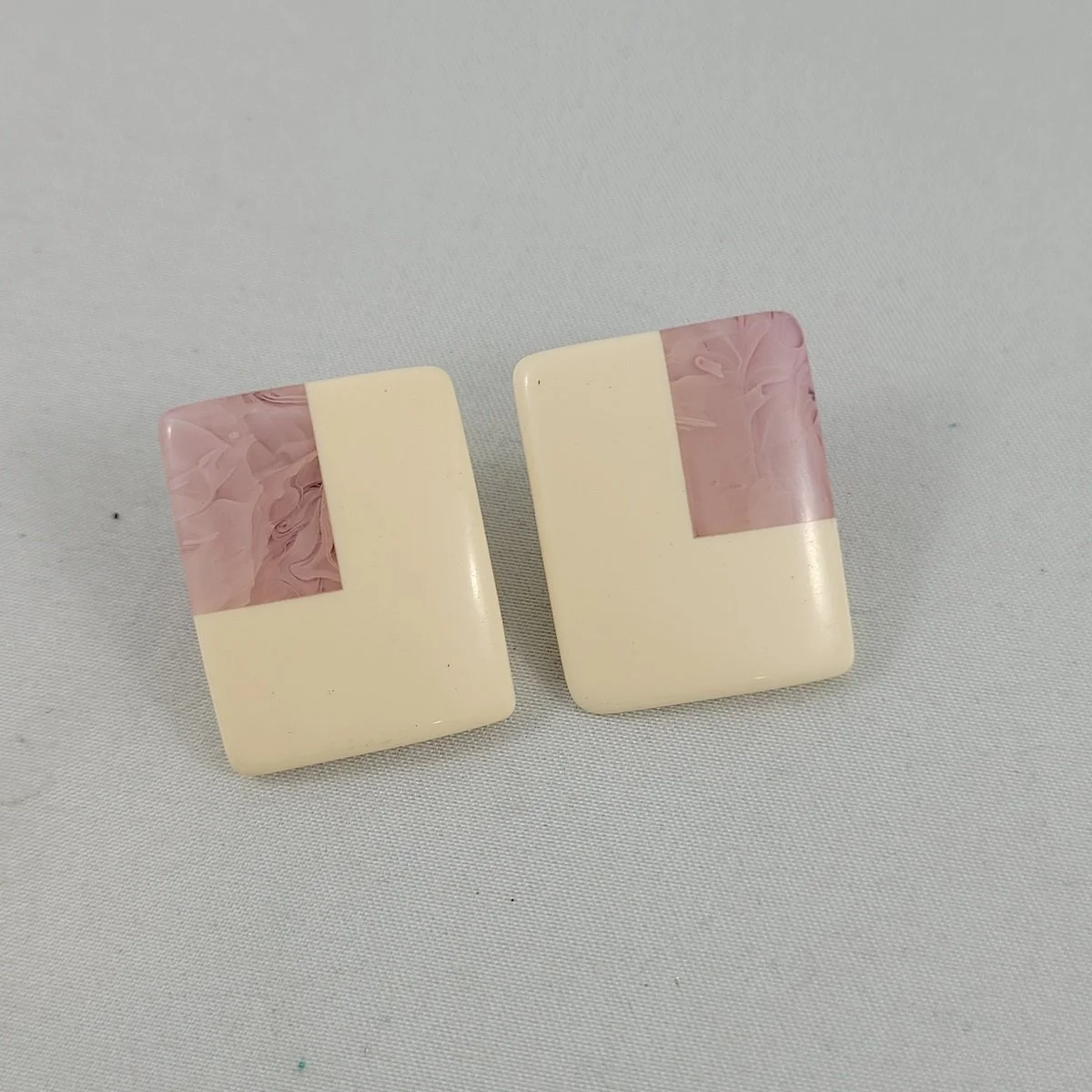
Artisan "Puzzle-Inlay" Lamination: A masterclass in subtractive studio engineering. This features a marbled mauve Rhodoid corner hand-fitted into a precisely carved cream base. The "Lock-and-Key" fit is evidenced by the microscopic structural shadow line visible beneath the seamless surface glaze.
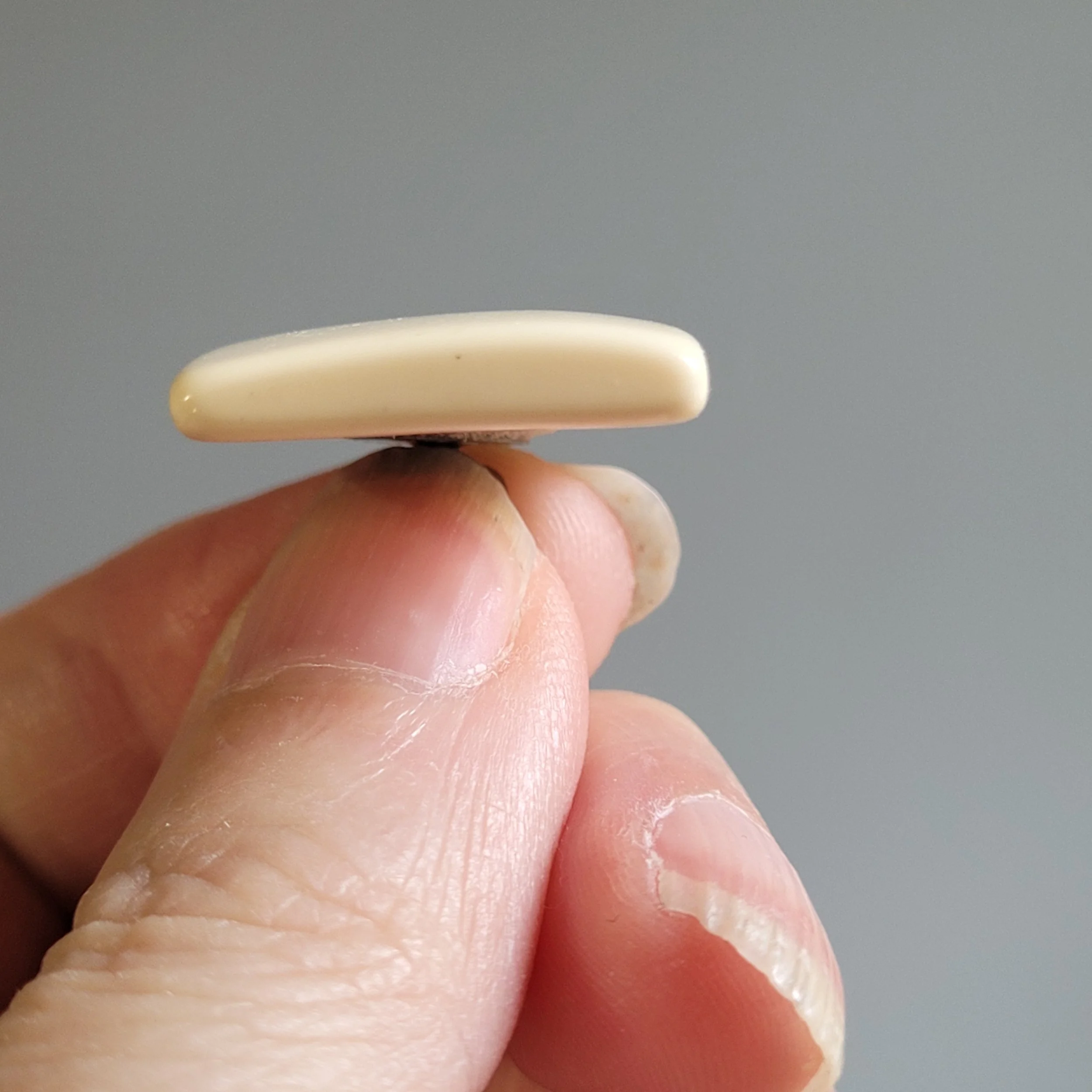
Asymmetrical 4-Point Geometry: Carved from a substantial 4mm block with a specialized "Diagonal-Wobble" profile. One diagonal axis measures 3mm while the opposing diagonal measures 2mm, creating a dynamic, stealth-sculpted silhouette that prevents the oversized rectangle from sitting flat against the lobe.
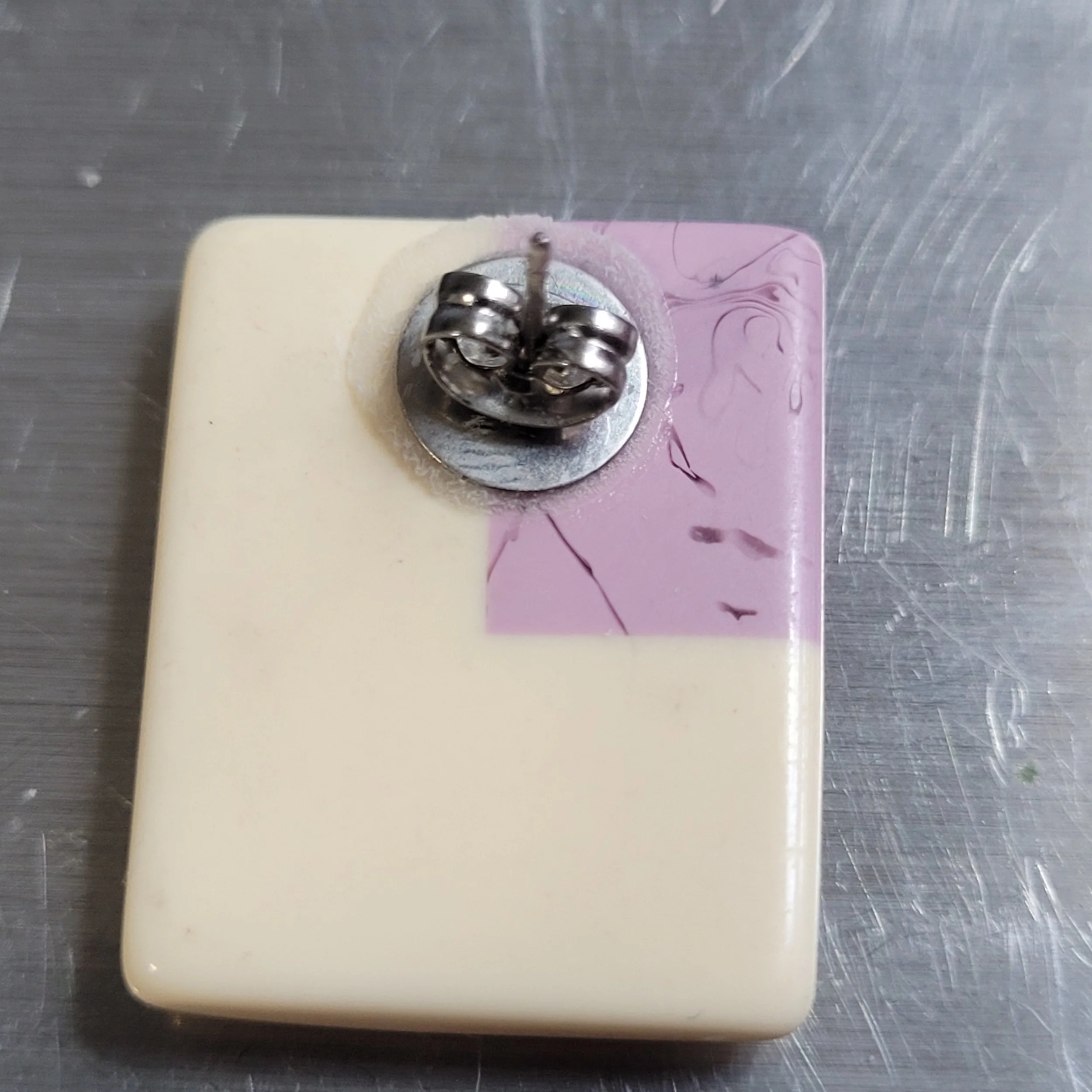
Sedimentary Pigment Drift: The marbled mauve segment exhibits "pigment settling" on the reverse side—an archival diagnostic marker of authentic, slow-baked vintage Rhodoid (cellulose acetate) where heavy purple pigments concentrated during the thermal curing process.
High-Density Studio Resonance: Boasting a 6.2g weight, these utilize high-molecular-weight thermoset material, offering a premium "marble-clank" density and a liquid-luster finish that modern acrylic cannot replicate.
Archival "Clotted Cream" Base: The opaque cream base exhibits a sophisticated off-white warmth, a hallmark of the 1970s Parisian Modernist color palette.
Type: Pierced earrings with low-profile archival stabilizer pads
Age/Origin: Circa 1978 / Paris, France
Marks: Unmarked (Attributed to Guillemette L'Hoir/François Schoenlaub based on specialized puzzle-inlay architecture, asymmetrical tapering, and sedimentary pigment DNA)
Measurements:
Weight: 6.2g
Thickness: 4mm (Center) / 3mm and 2mm (Asymmetrical Tapered Corners)
Dimensions: Approx. 1” x 0.875”
Condition: Excellent Archival Condition. The hand-fitted inlay remains perfectly tight with zero separation. The surface exhibits a high-octane "Liquid Luster" finish.


